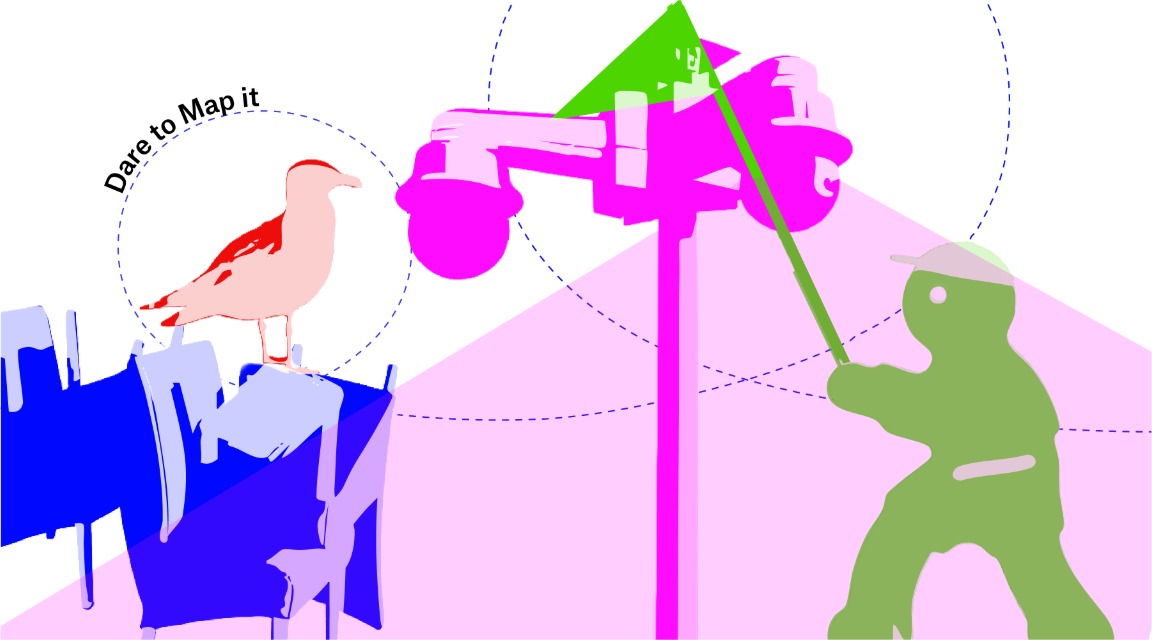
A counter cartography workshop series
Dare to Map it
Mapping isn't just about lines on paper. It's a radical act of seeing, feeling, and reclaiming space. In this counter cartography series, we centre lived experience and turn overlooked details into starting points for inquiry: dumpsters' hidden ecologies, chewing gum's street hierarchies, neighbourhood security cameras. What do their relative positions tell us about how we really interact with the city, and about the inner workings of the city itself? This September, we invite you to join us in exploring how mapping can reveal the inner workings of the coastal city of The Hague and open up new ways of thinking about care, control, and coexistence.
ABOUT THE SERIES
Dare to Map It is a three-part workshop series along The Hague’s coast, exploring how counter cartography can shift perspective and bring new knowledge into design and planning processes. Rather than treating mapping as a neutral representation of space, we use it as a critical and creative method to understand how social, ecological, and political processes are shaped in the city.
why counter cartography
Counter cartography helps us look beyond the obvious. It gives room to knowledge which is often excluded from conventional planning, such as lived experience, different levels of environmental stress, informal use, and more-than-human relations. By working with mapping as a shared surface for discussion and speculation, the series explores how design can respond to questions of surveillance, environmental stress, and more-than-human ecologies.
Our Inspiration
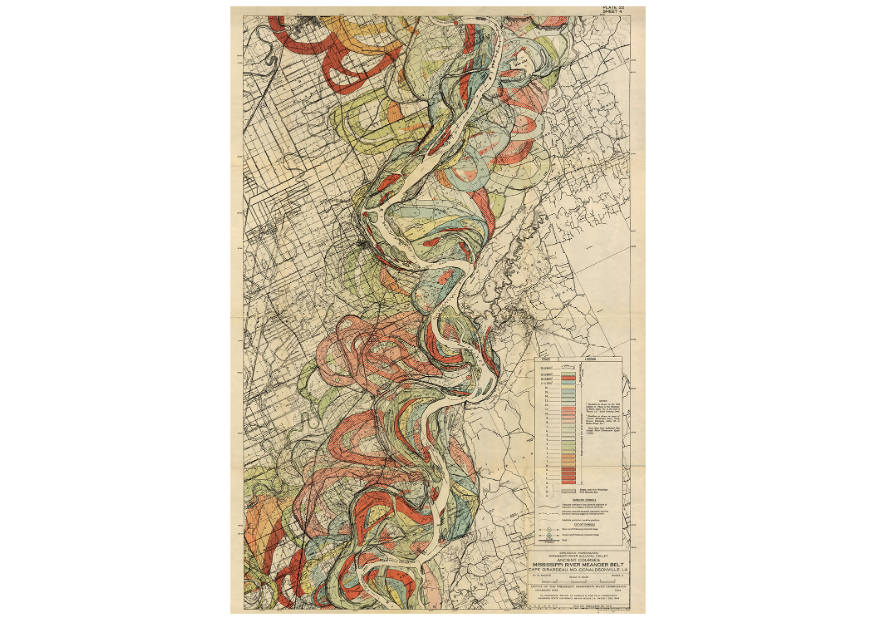
Harold N. Fisk Alluvial valley of the Mississippi river. Ancient courses Mississippi river meander belt. Cape Girardeau, MO — Donaldsonville, LA 1944
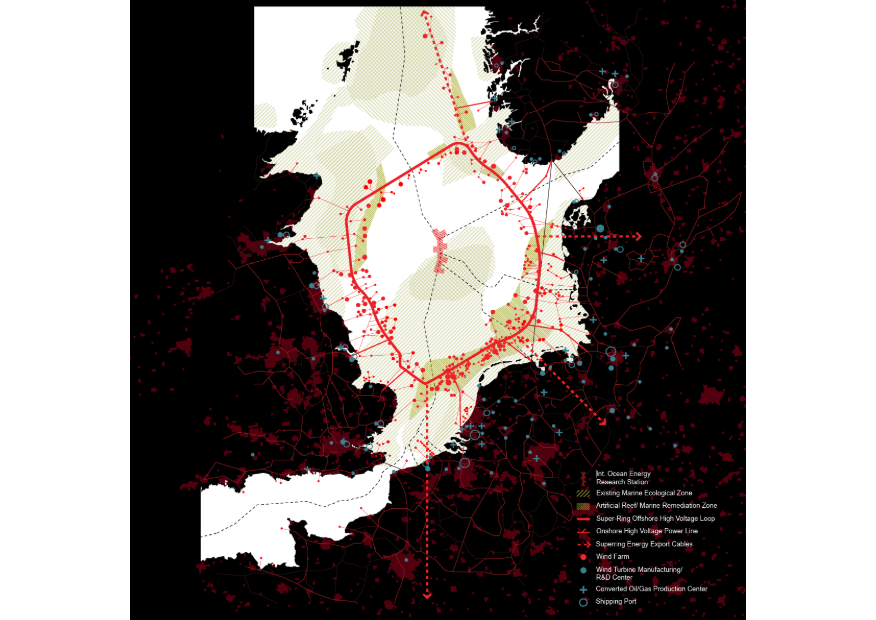
OMA The North Sea masterplan for 2040, 2008
What you’ll take away
- New mapping techniques.
- Hands-on fieldwork experience.
- Collaboration with designers and researchers.
- New perspectives on the city and coastline.
- Practical tools and ideas to use in your own work.
The three lenses
During the workshops, we’ll work within three lenses. These are simply guidelines for following your own curiosity!
Surveillance asks how control, visibility, and safety shape public space.
Environmental stress focuses on exposure, pollution, noise, heat, and other conditions that affect both human and more-than-human life.
More-than-human ecologies draw attention to plants, animals, micro-ecologies, and material residues that are usually overlooked.
THE WORKSHOPS
Change in dates due to Public transport strike on the 9th of September.
Matters of FactThe first workshop takes place in the field. We will use our senses to explore our surroundings, paying attention to patterns, movement, and those around us. Rather than relying on conventional mapping assumptions, we will experiment with counter cartography through photos, 3D scans, clay, gathered materials, sketches, and other media. The session is about making, testing, and letting our curiosity guide us. |
16 September14:30–17:00 |
Matters of ConcernIn the second workshop, we review the material gathered in the first session and use it to identify connections, tensions, and patterns. Through desk research, we develop research questions and working assumptions, and open up broader questions of care, control, and coexistence. |
23 September14:30–17:00 |
Matters of Care & Matters of ImaginationThe final workshop takes place within Toekomst Atelier Oostkop. The first part, Matters of Care, builds on the concerns and conclusions from the previous workshop, with small-group work focused on developing a design proposal and reflecting on the outcomes of the process. The second part, Matters of Imagination, explores alternative futures through counter-maps and speculative spatial organisation. |
30 September13:00–17:00 |
PARTICIPATE
Open to everyone: researchers, designers, architects, urban ecologists, curious citizens — anyone with an interest in the spatial dimensions of the city they inhabit.
You can join the full series or register for individual sessions that fit your schedule. Each workshop builds on the previous one, but you are welcome to enter the process at any point. New participants bring fresh perspectives, and that diversity of voices helps strengthen the project’s outcomes.
DETAILS
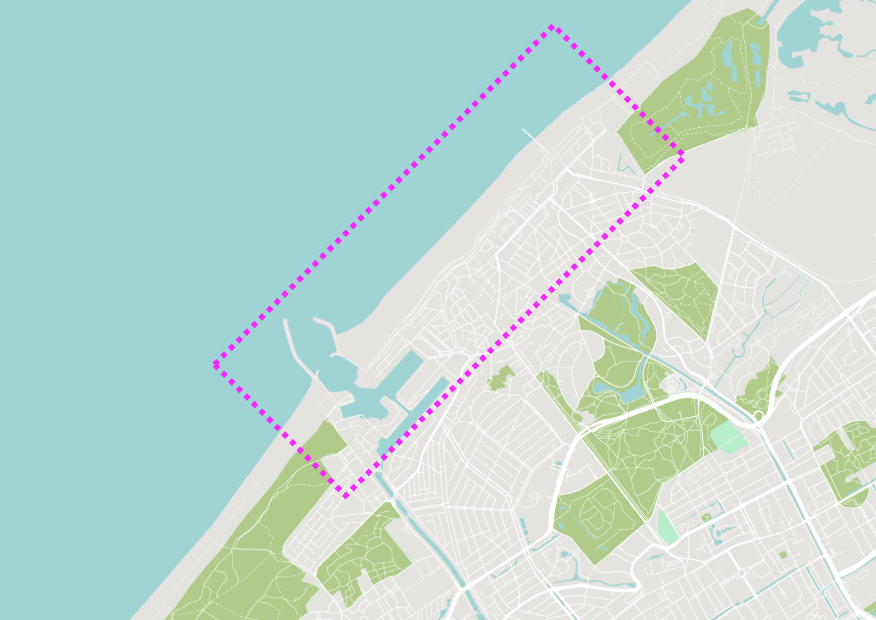
Location: The Hague, Scheveningen
Time: 14:30-17:00 (Starting at 13:00 for the last workshop)
Dates: 16, 23 September 2026
Contact: Kirthan Shekar and Gabriele Caradonna
The counter cartography workshop methodology is informed by María Puig de la Bellacasa’s Matters of Care, which reframes research as a situated, relational, and caring practice.
