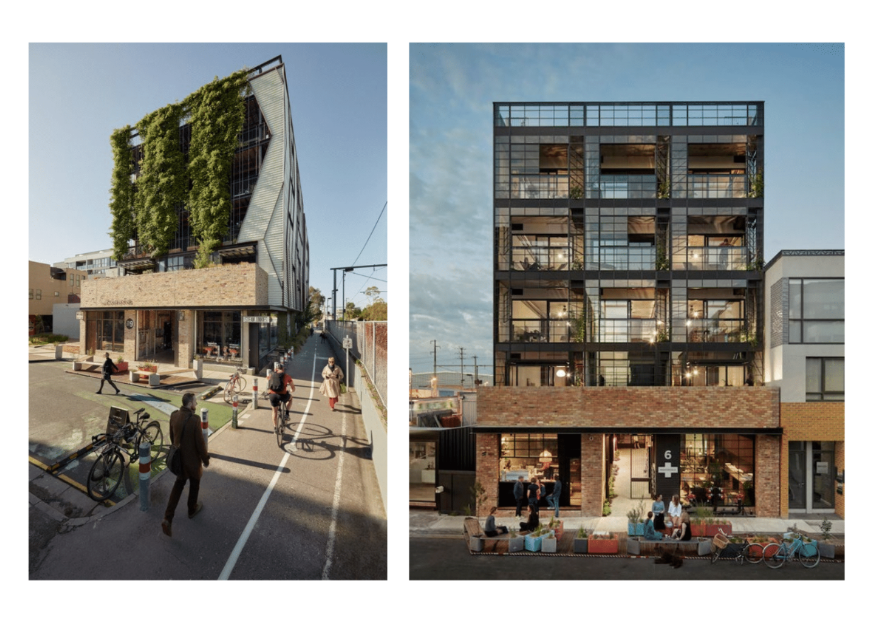
Nederland verdient een bruisende metropool. Een sterk stedencluster van internationaal formaat, geaard in de delta van Rijn en Maas. We zien een mooie, leefbare, gezonde en groene metropool voor ons. Het verbeelden, verbouwen, ontwerpen en versterken van die Deltametropool is al ruim twintig jaar de missie van Vereniging Deltametropool.
De vereniging is ontstaan uit overheden, bedrijven en individuen die elkaar vinden in deze gedeelde missie.
Aan het realiseren van onze missie werken we, samen met onze leden, op allerlei verschillende manieren. We verbinden mensen of instanties met elkaar om samenwerking te bevorderen. We initiëren of coördineren onderzoek en we adviseren overheden of bedrijven. En we stimuleren uitwisseling van kennis en ideeën door middel van workshops, brainstormsessies, debatten en congressen.
Vereniging Deltametropool
Museumpark 25
postbus 600
3000 AP Rotterdam
Blijf op de hoogte van interessante evenementen ideeen en initiatieven omtrent metropoolontwikkeling, meld je aan voor de nieuwsbrief.
minute read
IFHP x VDM Learning Labs - 27 januari 2025
The Learning Labs is an online exchange and learning platform between IFHP and Deltametropool members, aiming to foster knowledge exchange and develop practical, scalable solutions that can be implemented across diverse urban contexts. Through a blend of international expertise, case studies, and collaborative discussions, this series will lay the groundwork for innovative urban planning strategies adaptable to cities worldwide.
The IFHP x VDM Learning Labs began with a preparatory session that brought together experts, policymakers, and urban planners to tackle pressing challenges in housing, planning, and governance. This kickoff event laid the groundwork for an engaging series of eight learning sessions scheduled throughout 2025.
The session featured a keynote address by Floris Weekhout, urban historian and curator of the exhibition The Worker’s Paradise: World Garden Cities at Museum Het Schip. Weekhout linked the century-old ideals of the Garden City movement—human-scaled design, green spaces, and planned neighborhoods—to today’s critical issues of housing affordability, sustainability, and equity.
Key themes from the discussions
Adapting Garden City Principles: Revisiting historical urban planning concepts to address gentrification, housing inequity, and sustainability, with modern case studies from Berlin, London, and France.
Retrofitting Urban Spaces: Developing strategies to upgrade infrastructure while maintaining affordability and quality of life, tailored to local contexts such as flood-prone or arid regions.
Sustainability and Governance: Exploring agile governance models and policies to support sustainable urban transformations.
Inclusivity and Equity: Ensuring marginalized groups, particularly in the Global South, benefit from urban development projects.
Global-Local Balance: Adapting international best practices to regional conditions, like water management and cultural heritage conservation.
Participants priorities
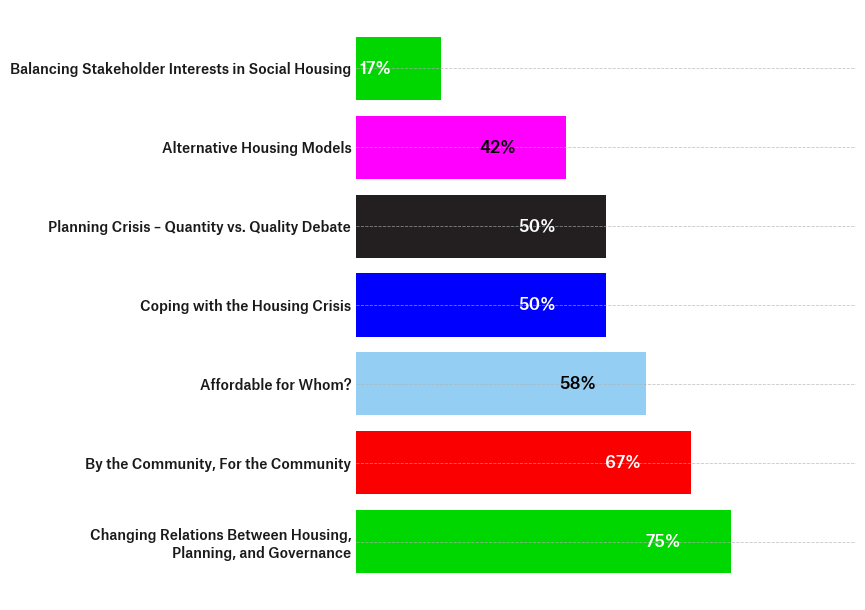
A poll conducted during the session revealed the most critical topics for further exploration
Themes for deeper exploration
Participants expressed strong interest in delving further into specific topics, including:
Housing Policies and Socio-economic Inequality: Analyzing how policies can address or exacerbate inequality.
Case Studies on Retrofitting Projects: Examining successful examples from diverse regions to identify best practices.
Balancing Sustainability and Affordability: Ensuring environmental goals does not increase the housing costs.
The session underscored the need to address barriers such as policy inertia, market pressures, and disparities in regional resources. Tailored approaches are essential for developing effective solutions.
Looking Ahead: 2025 Learning Labs Agenda
The session finalized the Learning Labs themes for 2025. Discussions will be held on the last Wednesday of each month, from 14:00 to 15:30 CET, focusing on 1–2 real-world cases. Planned topics include:
1. Changing Relations Between Housing, Planning, and Governance
2. Alternative Housing Models
3. By the Community, For the Community
4. Retrofitting in Existing City Limits
5. Urban Migration and Changing Demographics
6. Housing Policies and Socio-economic Inequality
7. Balancing Sustainability and Affordability
8. Affordable Housing Crisis
The first session, scheduled for January 29, will focus on “Changing Relations Between Housing, Planning, and Governance” with case studies from Brussels, Belgium, and Australia.
Conclusion
The preparatory session provided a comprehensive foundation for the IFHP x VDM Learning Labs, blending historical insights with contemporary priorities. By fostering collaboration and refining themes based on participant input, the session set a clear direction for actionable discussions. Future Labs will aim to address housing, planning, and governance issues in a way that is practical, inclusive, and responsive to the needs of diverse communities.
By focusing on concrete strategies and engaging stakeholders from across regions, the Learning Labs are well-positioned to explore solutions that balance sustainability, affordability, and equity in urban development.
#1.
29.01.2025
Changing Relations Between Housing, Planning, and Governance
Session #1 featured two speakers Ivo Cré from the Polis Network and Tom Alves from the Australian Housing and Urban Research Institute (AHURI). Both provided valuable insights into urban mobility, housing challenges, and governance, focusing on sustainable urban development across different regional contexts. Their presentations highlighted the intersections of transport, housing, and urban planning, with a focus on integrated solutions to urban challenges.
Key Themes from Ivo Cré’s Presentation (Polis Network)
Ivo Cré, Director of Policy & Projects at Polis Network, shared his expertise on the integration of urban mobility with housing and governance. His presentation focused on how transport systems are integral to connecting people to economic, social, and cultural opportunities, emphasizing their vital role within urban mobility and housing policies.
Transport as a Derived Demand: Ivo explained that mobility is not just a convenience but a fundamental necessity, arising from the need for individuals to move in order to engage in essential, meaningful activities. These activities—such as work, education, and recreation—are the cornerstone of a functioning society. Mobility, therefore, directly connects to housing, as it enables residents to access opportunities beyond their immediate living environment.
Trans-European Transport Strategy: Ivo highlighted the Trans-European Transport Network (TEN-T), which aims to improve connectivity and mobility across Europe. The recognition of 432 urban nodes in this network is key to fostering economic activity. These nodes will be required to prepare sustainable urban mobility plans by 2027, integrating transport with land use and spatial planning, marking a significant shift in governance and transport policy.
Urban Mobility and Housing Integration: Ivo emphasized that housing developments should be aligned with transport systems. In cities with dense housing and economic activities, the mobility system should prioritize space-efficient modes like walking and cycling, while larger metropolitan areas should focus on car and public transport integration.
Walkability and Cyclability Tools: Ivo introduced tools like the Moby score, which assesses accessibility based on public transport, education, and healthcare. These tools are used to enhance urban mobility and accessibility, helping cities and residents plan more efficient, sustainable mobility systems.
Climate City Contracts: Ivo discussed the Climate City Contracts, which involve 120 cities in Europe aiming for climate neutrality by 2030. These contracts highlight the role of transport in achieving sustainability and climate goals, emphasizing the synergy between housing, transport, and energy systems in urban planning.
Key Themes from Tom Alves’ Presentation (AHURI)
Tom Alves, a senior member of AHURI, shared insights on the Australian housing system and its critical issues. His presentation provided a comprehensive overview of Australia’s housing market, affordability challenges, and the role of AHURI in conducting policy-relevant research.
Overview of the Australian Housing System: Tom outlined the market-driven housing system in Australia, with high homeownership rates and a dominance of detached houses. He highlighted the growing trend toward apartments, especially in larger cities, as a response to housing demand.
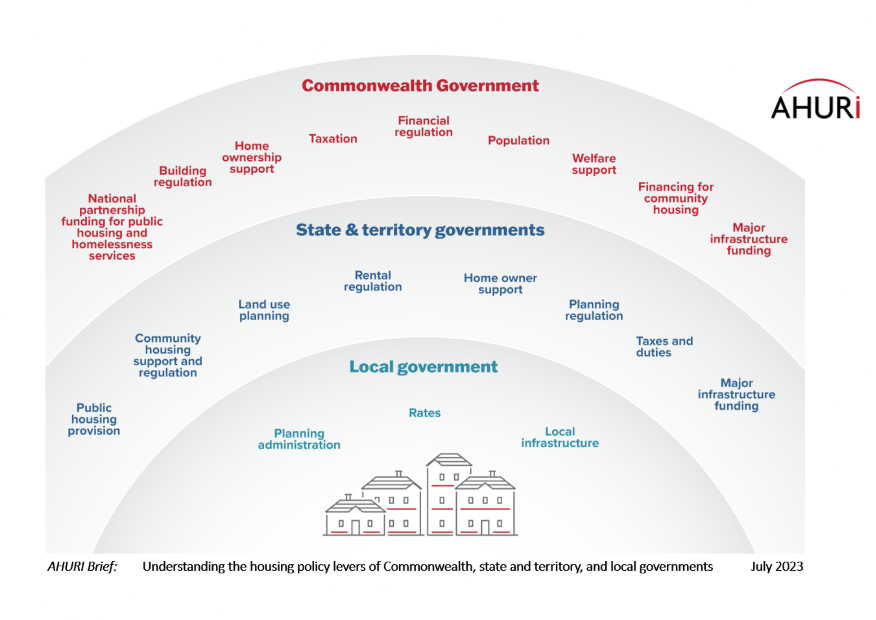
Critical Housing Issues: Tom emphasized affordability problems, high population growth, and spatial polarization in Australian cities. Increasing demand for housing has led to a severe housing affordability crisis, particularly for low-income households.
Key Changes in Australian Housing: Tom discussed key trends such as declining homeownership rates, an increase in apartment developments, and the worsening affordability issue, especially for low-income households.
Role of AHURI: AHURI works to integrate academic research into the policy cycle, providing evidence-based insights to governments and the public. The institute’s research aims to address housing and homelessness issues and improve the housing system in Australia.
Community-Focused Housing Developments: Tom highlighted successful medium-density, community-focused housing projects that align with policy goals. These projects aim to meet the housing needs of the community without relying on government subsidies.
Marie Deketelaere-Hanna added a vital point regarding governance. She highlighted the need for a “metropole level” of governance that allows different sectors, like housing and transport, to be addressed collectively. She argued that the current fragmented approach to governance often leads to inefficiencies, and a more integrated model could lead to better outcomes for urban development. Marie’s point reflects a broader discussion about how to create the “right governance” that allows these sectors to work together harmoniously.
#2.
26.02.2025
Alternative Housing Models
Session #2 featured three unique and insightful presentations on alternative housing models in the Netherlands. The discussion reflected both local expertise and international relevance, exploring the social, financial, and spatial dimensions of collaborative housing—from floating developments and layered co-housing to community land stewardship.
Key themes from Thieme Hennis
Thieme Hennis is the founder of And The People, a social innovation practice that advocates for Community Land Trusts (CLTs) as a long-term solution to housing inequality. Drawing from international examples and projects in Amsterdam Southeast, Thieme presented CLTs as democratic, participatory models that bridge urban development and community ownership.
1. CLTs separate land ownership from housing ownership, removing land from speculative markets and ensuring long-term affordability.
2. The model engages a range of stakeholders—residents, future users, and broader communities—through participatory governance.
3. CLTs support social infrastructure by fostering empowerment, stability, and collective decision-making.
International precedents from Vermont, London, and Lopez Island show how CLTs can build resilience across generations.
4. In the Dutch context, CLTs are gaining ground in response to displacement and gentrification, offering new forms of inclusive urban development.
Key themes from Tijmen Kuyper
Tijmen Kuyper is a researcher at BREiNN, a platform for sustainable building innovation, and an advisor at CoWonen. He presented Delta Domus, the world’s first floating social housing development—an adaptive, cooperative model for urban resilience.
1. Delta Domus addresses three major issues: housing affordability, climate adaptation, and social isolation.
Built on water, the project exemplifies spatial innovation for flood-prone urban areas.
2. The Beheercoöperatie (management cooperative) leases the entire complex from a housing association, giving residents collective control over their environment.
3. This governance model improves affordability, enables co-creation, and strengthens social cohesion.
4. Delta Domus revives core Dutch values of solidarity, flexibility, and care—making it a prototype for future climate-conscious housing.
Key themes from Philip Krabbendam
Philip Krabbendam is a long-time advocate of cooperative living and a co-founder of Centraal Wonen Delft, one of the Netherlands’ oldest co-housing cooperatives. He brings deep experience in participatory design and self-managed communities.
1. Cohousing structures operate on three scales: private units, shared kitchens (clusters), and communal facilities—each designed for different degrees of interaction.
2. Governance practices are tailored: group kitchens use consensus, clusters use consent, and the entire cooperative uses voting.
3. Architectural design is modular and diverse, allowing students, families, and older adults to live together in flexible arrangements.
4. Social and spatial adaptability ensures resilience over time, as household needs evolve.
The project reflects decades of co-creation—from spatial layout to governance structures—grounded in shared values of inclusion, autonomy, and practicality.
Collaborative discussion
In the group discussion, themes of financial viability, institutional support, and scaling without losing community values came to the forefront. Participants reflected on the challenges of going beyond pilot projects, ensuring inclusion of underrepresented communities, and sustaining momentum through co-governance. Across all models, the revival of collective living emerged not as utopia, but as a pragmatic, resilient response to today’s housing, social, and climate challenges.
#3.
26.03.2025
By the Community, For the Community
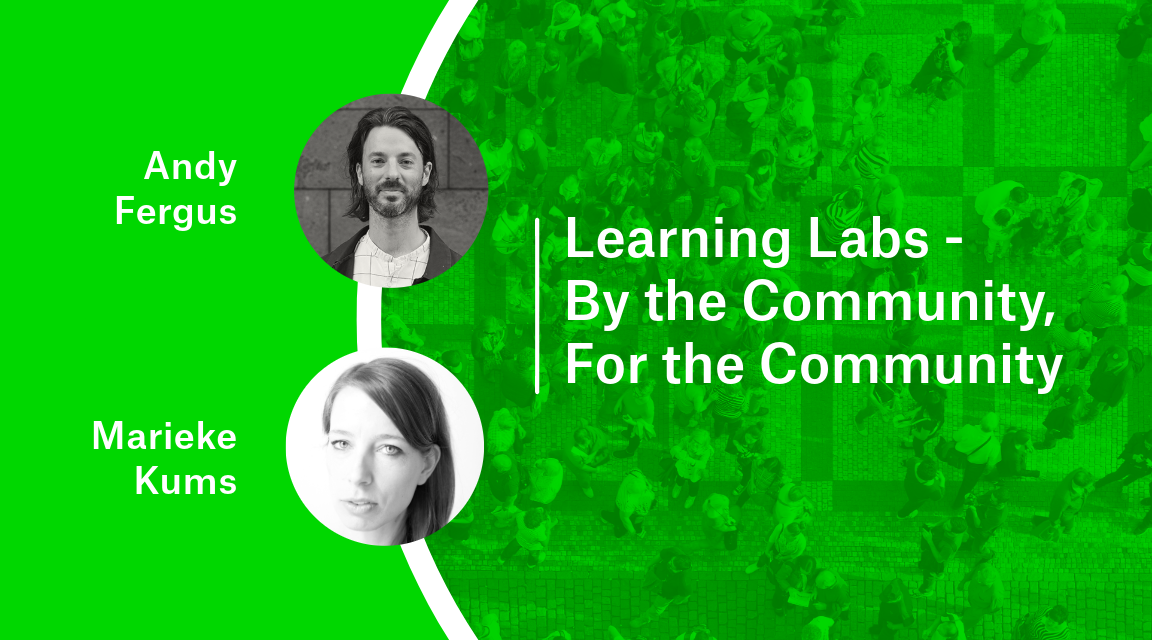
Session #3 featured Marieke Kums and Andy Fergus, who presented on community-led housing models in the Netherlands, Germany, and Australia. Their presentations highlighted how participatory planning and community engagement are central to creating inclusive, sustainable, and empowering housing solutions. The session also featured questions and reflections from participants across countries, including Kenya, France, and the Netherlands.
Key themes from Marieke Kums
Marieke Kums is an Architect and Founder of STUDIO MAKS (Netherlands)
Marieke is currently working on a book exploring housing cooperatives in Germany and the Netherlands. She compared case studies across both countries and emphasized the potential of cooperative housing as a form of community empowerment.
1. The Netherlands has a low percentage of housing cooperatives (less than 1%) compared to Germany, Austria, and Switzerland.
2. Cooperatives are legal entities where residents collectively own and manage housing. Her book studies ten such projects across Germany and the Netherlands, examining legal, financial, architectural, and social dimensions.
3. She highlighted funding mechanisms such as a new €40 million revolving fund from the Dutch government, municipal startup funds, and increasing interest from banks like Rabobank.
4. Marieke emphasized legal and financial hurdles, including the lack of cooperative structures in Dutch law and difficulties in land acquisition, where cooperatives often lose out to market developers.
5. Cities like Amsterdam, Utrecht, and Munich were cited as leading examples where land is reserved for cooperatives, offering a potential model for inclusive urban policy.
Key themes from Andy Fergus
Andy works across architecture, planning, and urban design in Melbourne. He advocates for public interest-driven development and urban literacy. Through both his professional work and public engagement (Melbourne Architours), Andy lives in and promotes community-led and sustainable housing initiatives.
1. Australia’s housing context is dominated by home ownership, low social housing (3-4%), and sprawling suburbs, but new community-led models are emerging.
2. He presented several examples:
Ys Housing (shared equity for single-parent households)
Retrofit projects (carbon-focused reuse of buildings)
Property Collectives (similar to CPOs in the Netherlands)
Assemble (build-to-rent-to-own with a 5-year rental path)
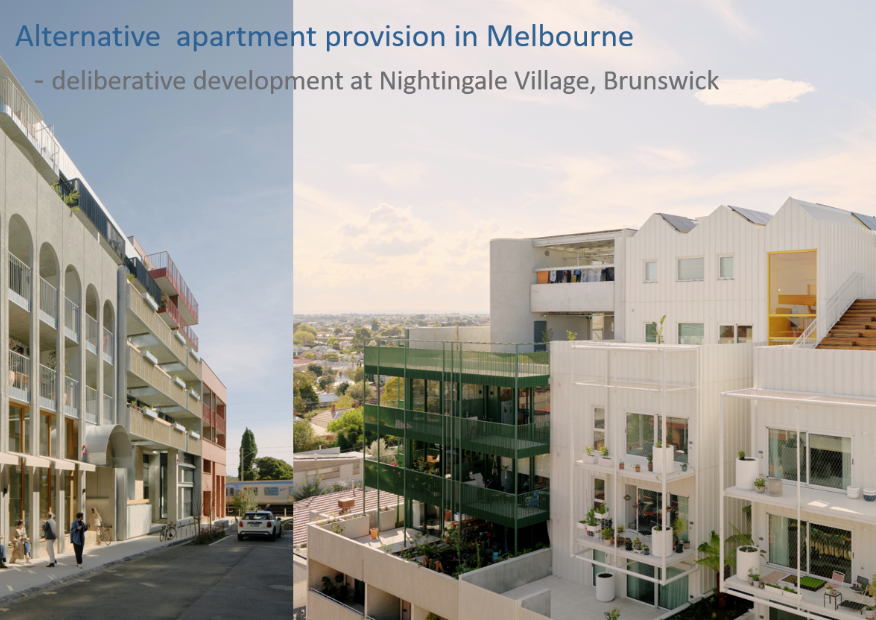
Nightingale Housing, a standout model, promotes affordability, low car use, communal spaces, and sustainability.
The Nightingale model is now being scaled by larger developers, showing how grassroots initiatives can influence the broader market.
Despite limited government support, Andy showed how community vision, professional facilitation, and public engagement can drive alternative housing.
Collaborative Discussion
Questions from participants surfaced the global resonance of these themes, including challenges around land, affordability, and inclusivity. Despite structural barriers, the cases presented demonstrate how communities—when empowered—can co-create housing solutions that reflect local needs, build social cohesion, and drive systemic change.
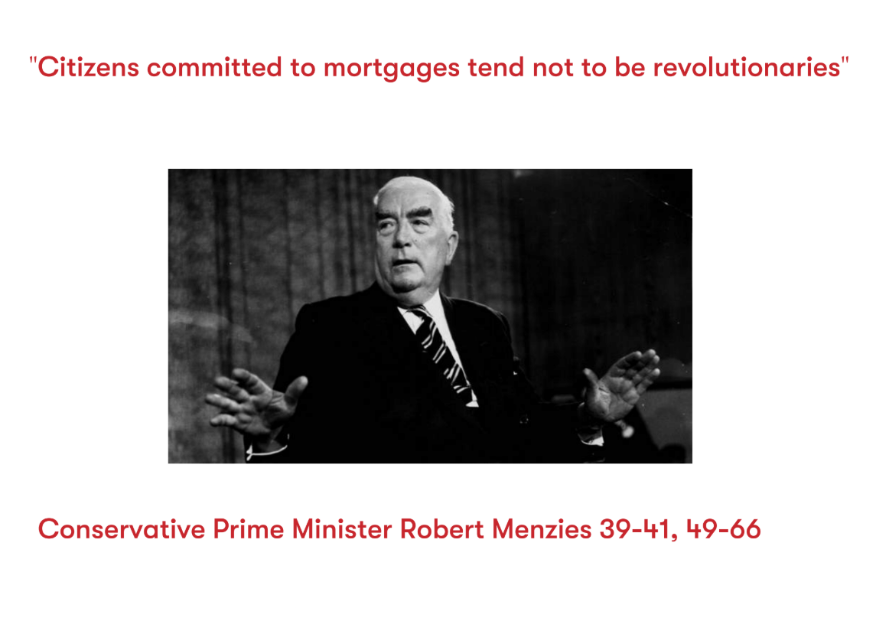
Both speakers noted that home ownership often correlates with conservative voting, highlighting how housing models can shape political behavior. Community-led alternatives may not only promote inclusivity and affordability, but also foster more progressive, collective forms of civic engagement.
This forth session explored the potential of retrofitting existing urban infrastructure to meet contemporary housing and sustainability challenges. It focused on how upgrading and adapting old buildings, infrastructure, and urban spaces can provide affordable, energy-efficient, and climate-resilient solutions within established city boundaries.
Three speakers were featured during the session, Dennis Henraat treasurer of Wooncoöperatie De Bonte Hulst a housing cooperative in Amsterdam, Claudio Acioly from the IHS-Institute for housing at Erasmus University Rotterdam and Karen Chapple Director of the School of Cities and Professor in the Department of Geography and Planning at the University of Toronto.
Key Themes from Dennis henraat
Dennis Henraat is the treasurer of Wooncoöperatie De Bonte Hulst, a housing cooperative in Amsterdam. Dennis presented De Bonte Hulst’s vision of enhancing urban livability through sustainability, well-being, and community integration, which includes creating a diverse range of affordable, bio-based, and energy-neutral rental units.
Dennis brought a current case study: Their ongoing cooperative housing project in Buiksloterham, Amsterdam-Noord. Read more here
Project overview
– 35 cooperative apartments on a small 320 m² plot.
– Emphasis on collective ownership, sustainability, and social cohesion.
– Construction planned to begin in Q2 2024.
– Cooperative founded in 2022, with 25 of 35 units filled.
– Municipality support through pre-financing and initial decontamination of land.
– Legal ownership lies with the association; residents are members.
Dennis Henraat touched on the themes of Housing densification, a circular district, the make economy and social cohesion.
Land and Financing
– Land acquired through non-competitive allocation due to municipal action plan.
– Will pay market price for land in two years.
– Pre-financed by local government; financial risk lies with members if project fails.
Key Themes from Claudio Acioly
Claudio Acioly is an architect and urban planner with over 40 years of experience in housing, slum upgrading, and urban development across more than 30 countries. He has held senior positions at UN-Habitat and GIZ, and authored key publications on housing policy and slum upgrading strategies. Claudio Acioly presentation will empasise the need for a cross-sectoral approach to urban transformation. His discussion highlighted how integrating various sectors—such as housing, infrastructure, mobility, and social services—can enhance the effectiveness and sustainability of retrofitting strategies.
Claudios presentation focused on retrofitting informal settlements
– Retrofitting framed as a city-wide strategy for urban improvement and integration.
– Goal: Integrate informal settlements into the formal urban fabric with basic services and legal recognition.
5 Dimensions of Informal Settlements
– Lack of improved sanitation.
– Lack of access to clean water.
– Lack of security of tenure (property rights).
– Non-durable housing (poor construction).
– Overcrowding (lack of space).
Policy Models for Intervention
– Slum clearance and relocation: full demolition, residents moved to distant social housing.
– Urban redevelopment model: demolish and rebuild with option for return.
– This may displace original residents due to market pressures.
Rotterdam Case (1980s): A Positive Example
Resident-led redevelopment through municipal support:
– Neighborhood groups with voting power.
– A municipal architect assigned to work for residents.
– Residents directed their own development decisions.
Retrofitting as Urban Regeneration Also referred to as urban renewal or redevelopment.
– Targets run-down areas for improvements in:
1. Environment
2. Housing
3. Economic and social opportunities
– Involves revitalizing underutilized assets, supporting sustainability and inclusion.
Claudio’s Vision for Strategic Urban Retrofitting
Conduct a critical analysis of existing urban stock and infrastructure.
– Develop public-private funding mechanisms.
– Create a city-wide vision for compact growth and infrastructure use.
– Use backyard and rooftop development systematically (not just ad hoc).
– Leverage density to improve local services (e.g. shops, jobs).
Key Themes from Karen Chapple
Karen Chapple – Director of the School of Cities and Professor in the Department of Geography and Planning at the University of Toronto. She is also Professor Emerita of City & Regional Planning at the University of California, Berkeley, where she held the Carmel P. Friesen Chair in Urban Studies. Karen will present her work on accessory dwelling units (ADUs) shows how cities can reuse existing spaces, like backyards or garages to create more affordable, sustainable housing and respond to today’s urban challenges.
What are ADUs?
– Small secondary housing units (e.g. backyard homes, garage conversions).
– Serve as affordable, flexible housing for singles, elderly, students, and increasingly families.
Key Barriers to ADU Implementation
– Zoning restrictions:
– 54% of Toronto and 95% of California land zoned for single-family housing.
– Development fees and setback/design standards often make ADUs unfeasible.
– Legislative hurdles:
– California passed 100 bills to remove obstacles.
– Public concern: fear of increased density and loss of parking.
Benefits and Uses
– ADUs are often multi-use over time: e.g., rental, elderly care, Airbnb.
– Seen as anti-gentrification tools
Provide middle-income housing without displacing low-income residents.
– Majority used by friends/family or as starting homes.
– Many are metered separately for independent rental use.
Financing Challenges
– 50% funded through cash/credit/family loans.
– Difficult for elderly to secure loans.
– Federal programs emerging to support financing.
Social Profile and Scale
– Not all homeowners want to become small-scale developers.
– Only ~30% of eligible homeowners are interested in building ADUs.
– Still, demand is growing, and units are getting larger (2–3 bedrooms).
Policy and Planning Reflections
Could easy ADU policies discourage larger-scale redevelopment (e.g., apartments)?
– Most homeowners are not motivated to develop beyond small-scale.
– Need for state or city-level planning to ensure broader impact.
Historical Reference
– Vienna Settler movement (100 years ago) cited as an example of grassroots housing innovation, parallel to:
– Informal settlements (Claudio’s context)
Canada Context
– Push to diversify housing types beyond “tall or sprawl.”
– Canadians are cautious about urban infill and loss of parking.
– Public education and planning needed to broaden support.
Collaborative Discussion
Retrofitting and Gentrification
– Claudio Acknowledged that retrofitting can unintentionally cause gentrification.
– Regitze raised a provocative point: retrofitting may benefit only elite groups, sparking a discussion on who really benefits from urban upgrades.
– Karen Chapple discussed ADUs as flexible, anti-gentrification tools.
Dutch Planning and Densification
– Paul highlighted a shift in Dutch planning:
– Focus on densification within cities rather than expanding into greenfields.
– Current deregulation policies mostly benefit institutional developers, not citizen-led initiatives.
– Emphasized the need for diverse approaches to create healthy, vibrant communities.
Urban Potential in Existing Stock
Claudio suggested cities need:
– A systematic analysis of existing urban stock.
– Public-private funding mechanisms to support compact, sustainable growth.
– Policies to turn underused spaces (backyards, rooftops) into housing opportunities.
#5.
28.05.2025
Changing Demographics: Urban Migration and Governance
The fifth session explored how shifting population dynamics and urban migration are reshaping governance and housing systems. As people move to cities in search of better opportunities, these demographic changes present both challenges and opportunities for urban planning, housing, and policy development.
Speakers included
-Dr. Sheikh Serajul Hakim is a Professor of Architecture at Khulna University, Bangladesh, specializing in urban informal settlements, rural-urban migration, and climate-resilient housing.
-Hanna Rudner works as the program coordinator at Buurthuis De Bol, a resident-run and community-claimed center located in a social housing neighborhood in Amsterdam.
-Dr. Yvonne Franz is an urban geographer and senior lecturer at the University of Vienna, where she also serves as Vice Director of Studies in Geography and Scientific Director of the postgraduate program “Cooperative Urban and Regional Development.”
Key themes from Dr. Sheikh Serajul Hakim
Dr. Sheikh Serajul Hakim explained the unique challenges faced by the Bihari refugee community in Bangladesh, who have experienced multiple displacements since the 1947 Partition. He explained how these communities, while recently granted citizenship, continue to live in camps that function as politically constructed spaces of exception, fostering both cultural resilience and social isolation. Hakim highlighted the complex relationship between refugee status, cultural identity, and integration, emphasizing that despite official efforts to integrate them, Bihari refugees navigate their marginal position with strategic self-management that resists full assimilation, illustrating the deep-rooted complexities of social inclusion and identity politics. Hakim’s presentation teaches us that refugee integration is far more complex than simply granting legal status or citizenship; it also involves addressing deep-rooted cultural identities, historical traumas, and spatial inequalities that shape the lived experiences of refugees.
-Triple Displacement of the Bihari Community. The Bihari community faced displacement from India to Pakistan during the 1947 Partition, then from Pakistan to Bangladesh during the 1971 Liberation War, and finally statelessness within Bangladesh after the war.
-Camp as a political Construct. Refugee camps act as spaces of exception, where the legal status of residents is uncertain, and social integration is limited.
-Integration vs. Cultural Retention. The Bihari community continues to maintain distinct cultural practices which causes negative perceptions from the host community, complicating integration efforts.
-Strategic Self-Management. The Bihari community’s agency contributes to a “third way” of identity that is neither fully integrated nor fully isolated.
-Challenges of Sustainable Integration. The physical structures of the camps, originally temporary and now semi-permanent, create spatial and social barriers that limit full integration into urban life. These camps resemble slums, characterized by overcrowding and inadequate infrastructure, which isolate the community and limit their access to education, employment, and social services.
Key themes from Hanna Rudner
Hannah Rudner presented her experience developing Buurthuis De Bol. She shared how local residents, many of whom have migration backgrounds and face social and economic challenges, have come together through a community center which hosts social events, cooperative businesses, and governance experiments. Hannah emphasized the importance of building trust, addressing power dynamics, and navigating conflicts in community work. She highlighted the innovative use of holacratic governance to distribute leadership, alongside the constant challenge of balancing emotional needs with formal responsibilities.
-Holacratic Governance Model. Hanna described the implementation of holacracy as a flat, decentralized governance model where each team member has clearly defined roles and responsibilities. This approach encourages distributed leadership, empowering all members to take ownership.
-Navigating Conflict and Power Dynamics. Hannah emphasized the importance of managing conflict constructively within diverse groups, noting that differences in communication styles, cultural backgrounds, and personal experiences often lead to tensions. She highlighted the need for conflict resolution tools and intentional dialogue to build trust and prevent divisions.
-The Overstream and Understream Framework. Hannah explained the concept of “overstream” (formal structures, roles, and policies) and “understream” (informal, emotional, and relational dynamics) to illustrate how governance operates on multiple levels.
-Community Wealth-Building and Local Empowerment:
Hannah stressed the importance of building community wealth by supporting local cooperative businesses and encouraging residents to move from welfare dependence to active economic participation. She highlighted examples like catering cooperatives and cleaning services as ways to foster local empowerment and sustainable economic opportunities.
Key Themes from Yvonne Franz
-Yvonne Franz’s presentation highlighted the challenges of integrating diverse migrant communities into Vienna’s housing market and governance structures. She explained that while Vienna is renowned for its social housing legacy, many migrants still find themselves in precarious private rentals due to language barriers, legal restrictions, and limited support. This situation is compounded by exclusion from local democratic processes, which limits migrants’ ability to shape decisions that affect their lives. She emphasized the need for inclusive governance models—like multilingual participation and stronger migrant self-organization—to bridge these gaps and ensure that all residents can fully participate in shaping their communities and accessing stable housing.
-Yvonne described how Vienna’s population growth is heavily driven by migration, including both forced migration and labor migration. She highlighted the complex housing pressures that arise from these diverse migration patterns, especially in a city known for its strong social housing system.
-Housing Market Dynamics and Vulnerabilities. She explained the differences between public housing, cooperative housing, and the private rental sector.
-Challenges of Democratic Participation. Yvonne addressed the barriers that migrants face in participating in local governance and democratic processes. She pointed out that despite living in Vienna, many migrants (particularly non-EU nationals) cannot vote in city-level elections, limiting their influence over local decision-making and contributing to social exclusion.
-The Role of NGOs in Housing Integration. She described how NGOs play a critical bridging role by providing temporary housing solutions and support services to newly arrived migrants. However, these are often short-term fixes rather than sustainable, long-term integration strategies.
– The Need for Inclusive Urban Governance: Yvonne concluded by emphasizing the importance of inclusive governance structures that genuinely consider migrants’ needs and perspectives. She advocated for multilingual participation processes, stronger migrant self-organization, and more equitable access to democratic decision-making to foster sustainable integration.
#6.
24.09.2025
Housing Policies and Socio-economic Inequality
This sixth session examined how housing policies influence social and economic inequality. The session explored the role of urban development strategies in either perpetuating or addressing disparities. It will focus on how inclusive housing policies can contribute to social equity and help create more just, resilient cities.
Speakers included
Husam Husain is Editor in Chief of the Journal of Mediterranean Cities and professor at the German University in Cairo focusing on regeneration strategies and urban geo-economics.
Barsha Shrestha works with UNOPS and served over four years as a focal architect for post-disaster housing, resettlement, and heritage planning at Nepal’s National Reconstruction Authority.
Key themes from Husam Husain
Husam highlighted key insights from the Egyptian context, shaped by a fast-growing population and a government that can’t keep up with demands. Housing costs are disproportionately high compared to incomes, and tragically, around 30% of Cairo’s residents live below the poverty line. Many households lack basic sanitary facilities, while pollution and congestion further strain the city.
Government housing programs fail to address the needs of the large number of workers without formal contracts. As a result, wealthier social classes can purchase units either for investment or future use, leaving vulnerable groups behind. Meanwhile, gated compounds for the upper classes continue to expand ever farther from the city centre.
The situation has reached such an extreme that a new administrative capital is now being constructed 30–40 kilometres east of Cairo to relieve pressure on the metropolis.
• Egypt’s population doubled from 1980-2007 and doubled again by 2025, reaching 112 million with 2% annual growth
• Government needs 500,000 housing units yearly but only produces 200,000
• Housing costs average 7 times income (compared to 4 times in America)
• 30% of population lives below poverty line
• Units priced at ~4,000 euros seem affordable but require monthly income of only 80 euros
• Many workers lack formal contracts needed to qualify
• Higher social classes compete with lower classes for units
• Programs are not truly affordable for target populations
Key themes from Barsha Shrestha
Barsha presented her PHD on post-disaster housing resettlement in Nepal following the 2015 Gorkha earthquake (7.8 magnitude), which left over 22,000 households homeless and required resettlement for 4,700+ people.
The research showed how housing policy influenced resettlement outcomes through two contrasting communities.
Two Case Studies:
Panipukhari Settlement: Developed for 57 poor Tamang indigenous households using a top-down approach with government-designed prototype houses
Jilu Settlement: Developed for 70 privileged Brahmin households who had political connections and resource access
Key Policy Problems:
– Nepal lacked pre-existing policies and institutional frameworks
– Policies were formulated reactively 2+ years after the earthquake
– Government prioritized speed over quality due to urgency
– One-size-fits-all approach borrowed from China’s concentrated rural settlement model
Major Findings:
Privileged community (Jilu): High satisfaction (increased to 3.4) due to bottom-up participation, custom house designs matching their lifestyle, and cultural appropriateness
Poor community (Panipukhari): Low satisfaction (decreased to 2.3) leading to partial abandonment due to inadequate thermal comfort, lack of cultural elements (missing traditional open hearth), and no community participation in design
Conclusion:
Effective resettlement must respect local knowledge, empower affected communities, and prioritise long-term well-being over short-term efficiency. “Building back better” should be transformative, not just a structural achievement.
#7.
29.10.2025
Planning Crisis: Quantity vs. Quality Housing Debate
This seventh session addressed an ongoing debate in urban planning between prioritizing the quantity of housing versus ensuring the quality of housing. It focused on how urban planning can enhance climate resilience by integrating sustainability and climate-adaptive strategies into housing development.
Prachi Rampuria
Prachi co-founded EcoResponsive Environments in 2019, an award-winning practice creating health- and wellbeing-focused places through systems-based design. With over ten years’ UK experience, she has led multidisciplinary teams on masterplans, planning applications, and public realm projects. Trained in India under B.V. Doshi and holding an MA (Distinction) in Urban Design from Oxford Brookes, she received the Urban Design Prize. Her firm’s Heath Park masterplan was recognised by the UK Government and won major national awards. Co-author of EcoResponsive Environments (Routledge), she also teaches at Oxford Brookes and serves on several Design Review Panels.
Abdi Mehvar
Abdi is a Postdoctoral Researcher at the Faculty of Architecture and the Built Environment (Urban Development Management Group) at TU Delft. Holding MSc and PhD degrees in Coastal Engineering from the Netherlands, he has years of professional experience in leading and carrying out collaborative and cross-disciplinary research projects with a focus on climate risks and resilience in Europe and South-East Asia. Abdi will present his work with the Area Development Knowledge Foundation (SKG) and his involvement in the RED&BLUE project, a five-year transdisciplinary research initiative developing integrated real estate and infrastructure climate risk strategies for the Dutch delta.